
Detention Math That Wins Disputes: POD Timestamps + Free Time Caps
How freight brokers use POD arrival/delivery timestamps, rate confirmation free time, and caps to win detention disputes before paying the carrier invoice.
2026-08-04 · 8 min read
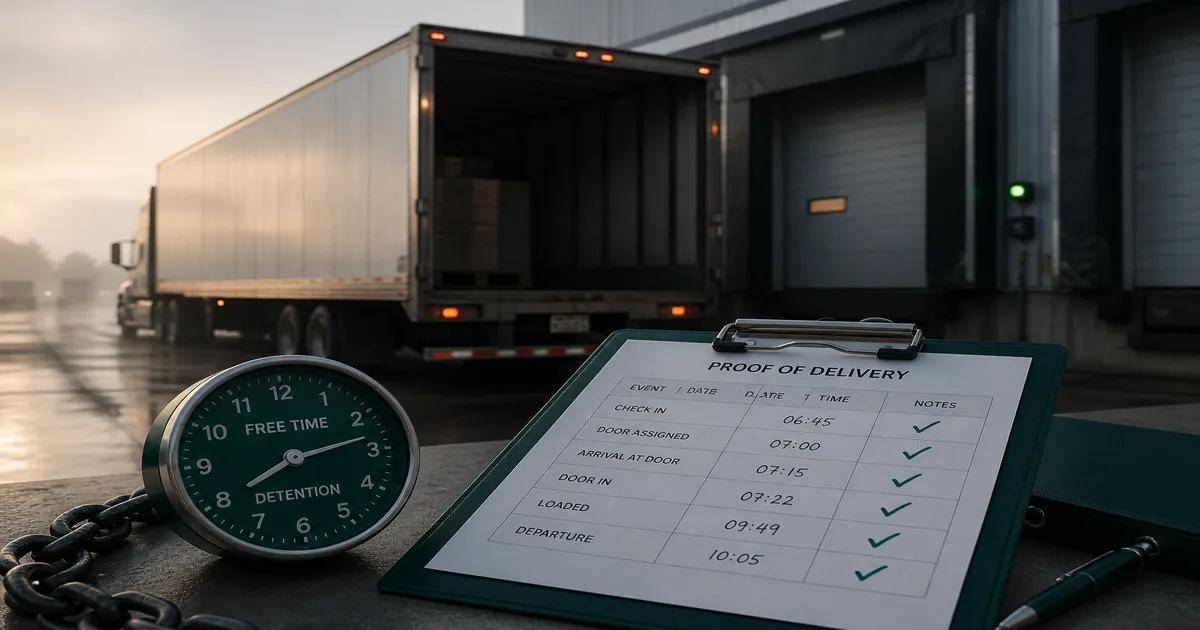
Detention is a math problem with an evidence problem
Detention only sticks when free time, hourly rate, caps, and wait evidence align. Brokers who pay the line as billed — then fight later — give away leverage.
The POD is usually the evidence. If arrival and delivery timestamps are missing or unreadable, the carrier’s hours become a story you cannot falsify.
The pre-pay detention checklist
Before AP remits a detention line, confirm:
- Rate confirmation states free time and detention rate (or an all-in that forbids it)
- POD includes usable arrival and delivery timestamps
- Billed hours do not exceed free time + authorized wait
- Caps / minimums match what was agreed — not what was invented
- Layover is not double-counted against detention
Why desks still lose these fights
Email threads split the invoice from the POD. Coordinators spend 8–15 minutes hunting PDFs. Someone pays to clear the aging report. The dispute packet never forms.
A pre-pay gate that holds detention without timestamps stops the leak without requiring a TMS.
How Jorora helps
Jorora Freight Audit treats detention and layover as evidence-backed accessorials. Thin packets become Needs Review or Reject — with reasons you can paste into a carrier dispute. Start with two free credits or request a pilot.
Win detention with POD timestamps
See how Jorora surfaces evidence gaps on a sample decision, then audit detention on your packets.